
Hon'ble Justice Nityananda Pandey addressing the Student Officers of PLSC Batch 02 on contemporary judicial and legal issues.
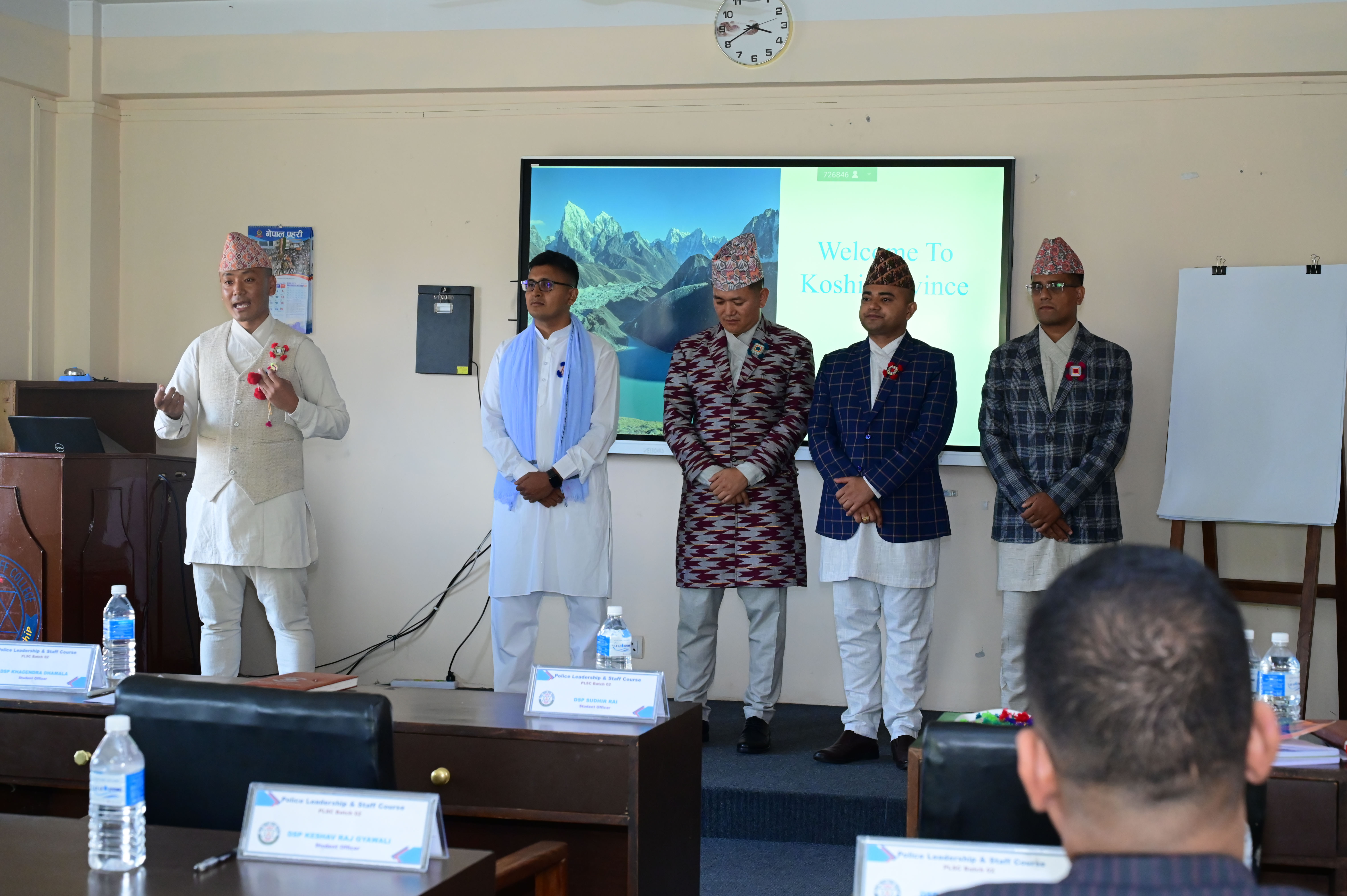
Exploring Koshi Province: A Presentation by PLSC Batch 02 Student Officers
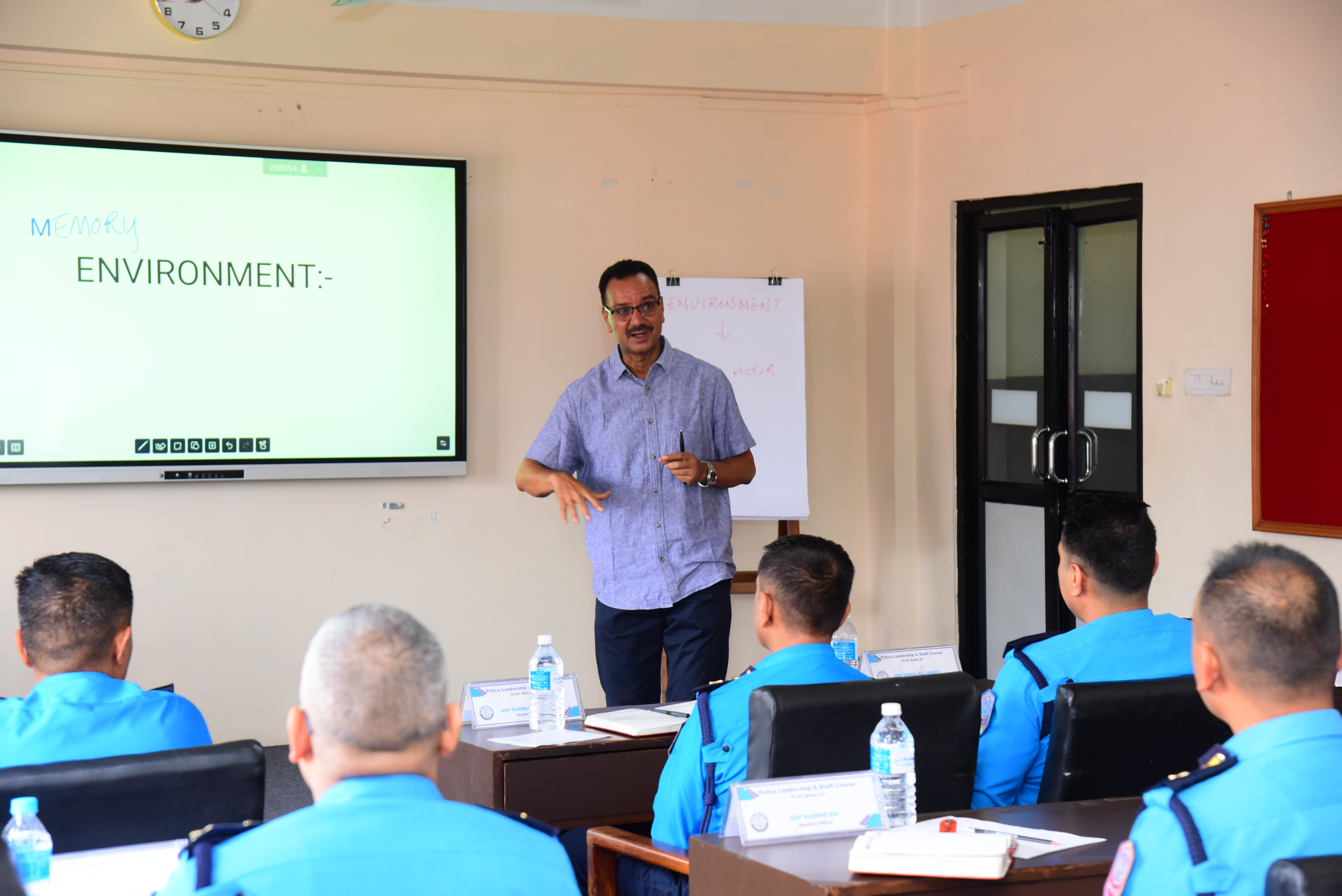
Insightful session by Hon'ble Rajendra Singh Bhandari (AIGP Retd.) on "Environment and Key Actors of Democratic Policing" for PLSC Batch 02 Student Officers.
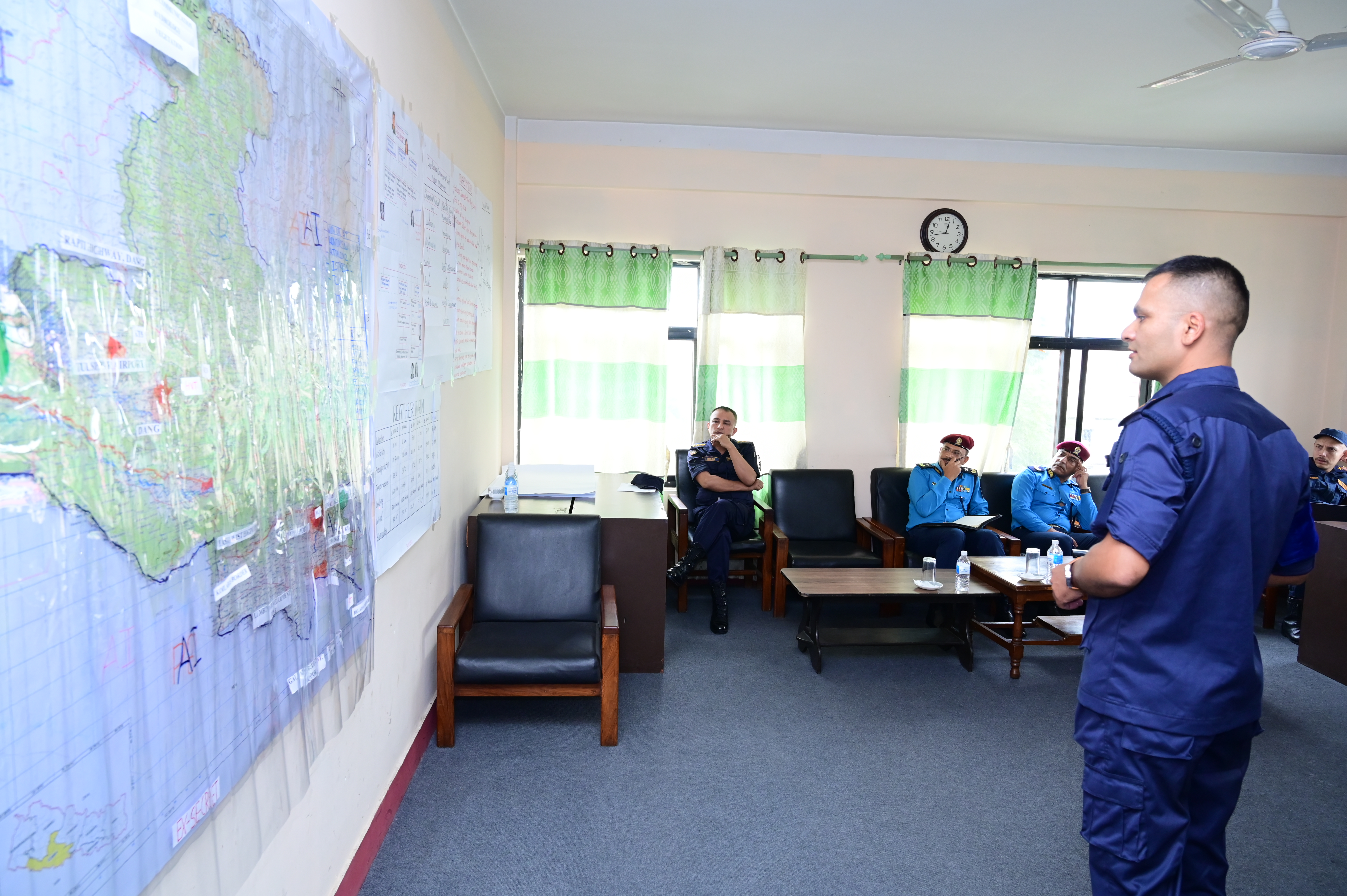
Executive Director of the National Police Academy, AIGP Siddhi Bikram Shah, and Director of the Nepal Police Staff College, DIGP Dinesh Kumar Acharya, together with Senior Instructing Staff (SIS) SSP Ved Bista, reviewing a presentation delivered by a Student Officer of PLSC Batch 02 during EX-CHANAKYA.
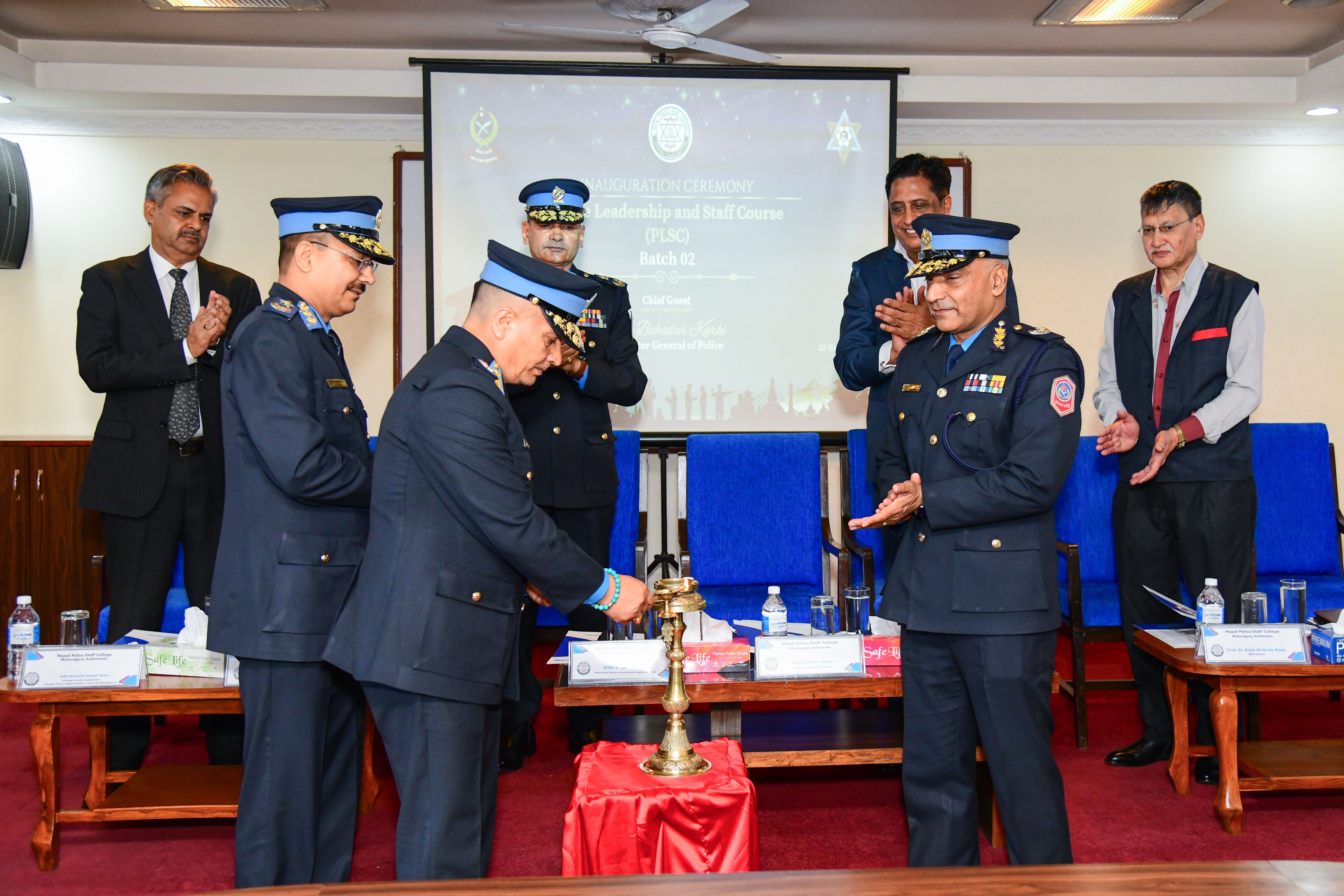
Chief Guest IGP Dan Bahadur Karki officially inaugurating PLSC Batch 02 amidst a dignified ceremony.
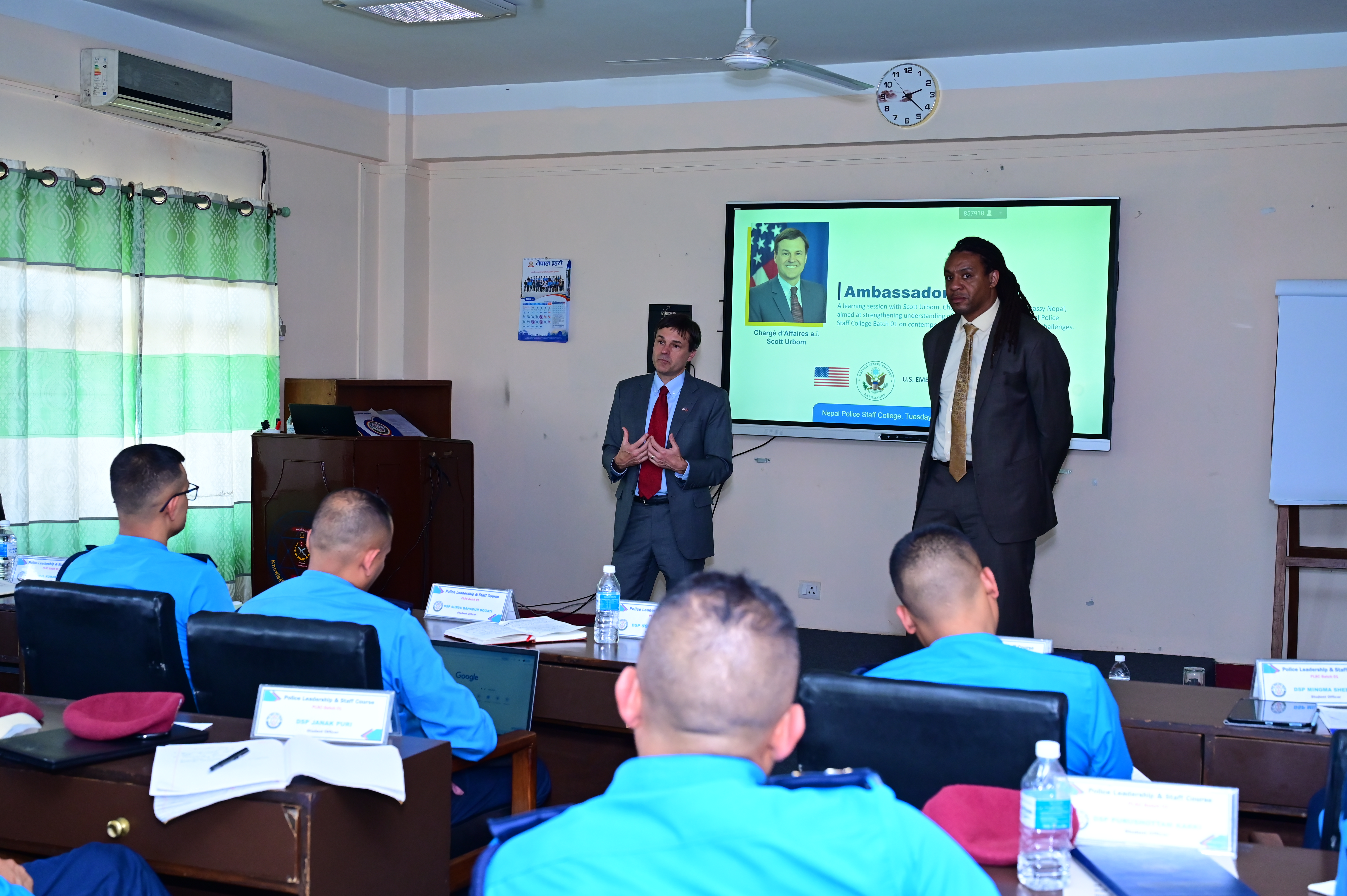
An insightful session on contemporary diplomacy and global security challenges with Mr. Scott Urbom, Chargé d’Affaires ad interim, and Mr. Wilbert Vaughn, Regional Security Officer, U.S. Embassy in Nepal, engaging with faculty members and Student Officers of PLSC Batch 01 at Nepal Police Staff College.
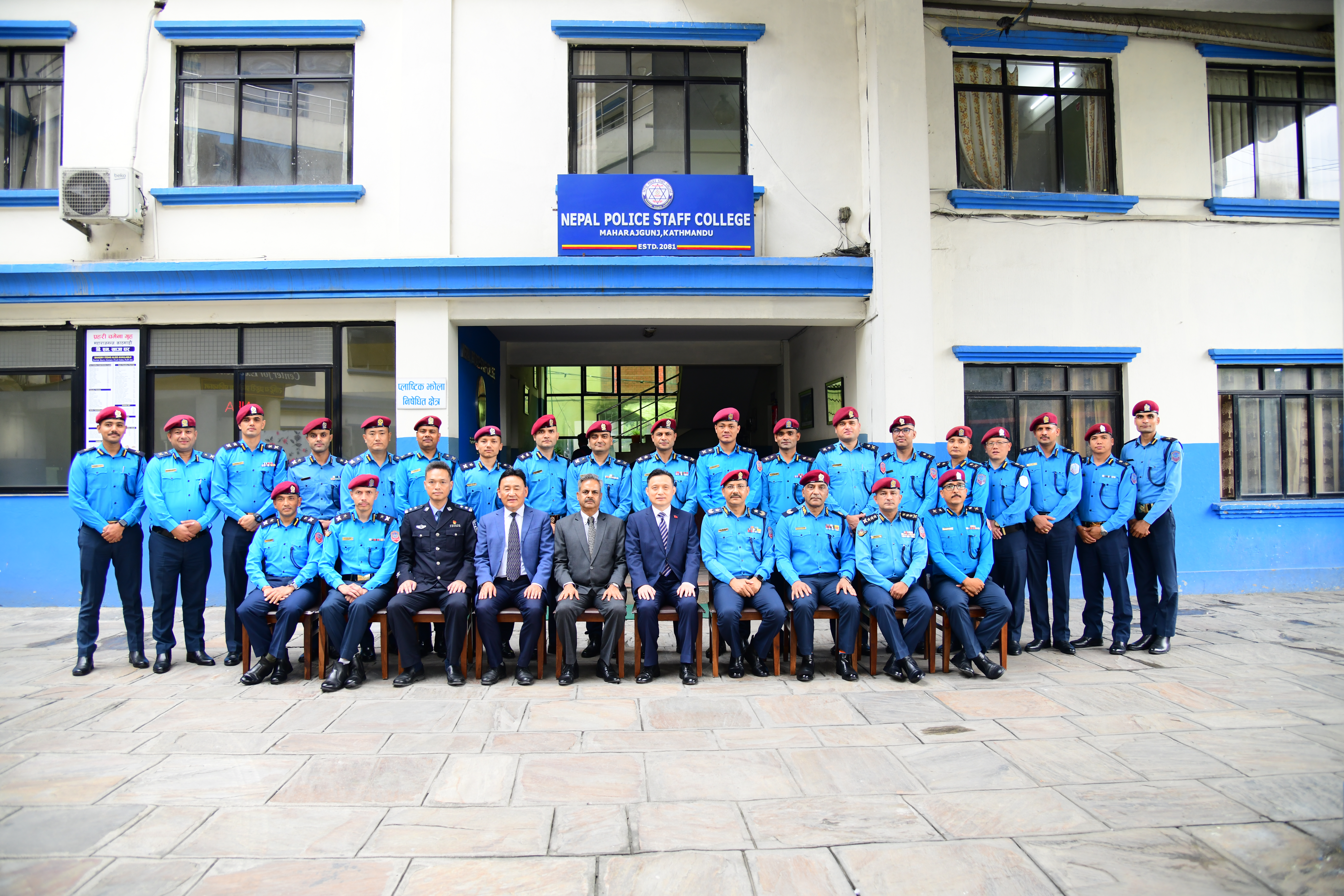
A distinguished interaction with H.E. Mr. Zhang Maoming, Ambassador of the People’s Republic of China to Nepal, following the Ambassador’s Talk on themes of mutual engagement and contemporary strategic discourse with faculty members and student officers of PLSC Batch 01 at the Nepal Police Staff College.

His Excellency Rob Fenn, Ambassador of the United Kingdom to Nepal, interacted with the Student Officers and faculty members of PLSC Batch 01 during the “Ambassador’s Talk” program at the Nepal Police Staff College
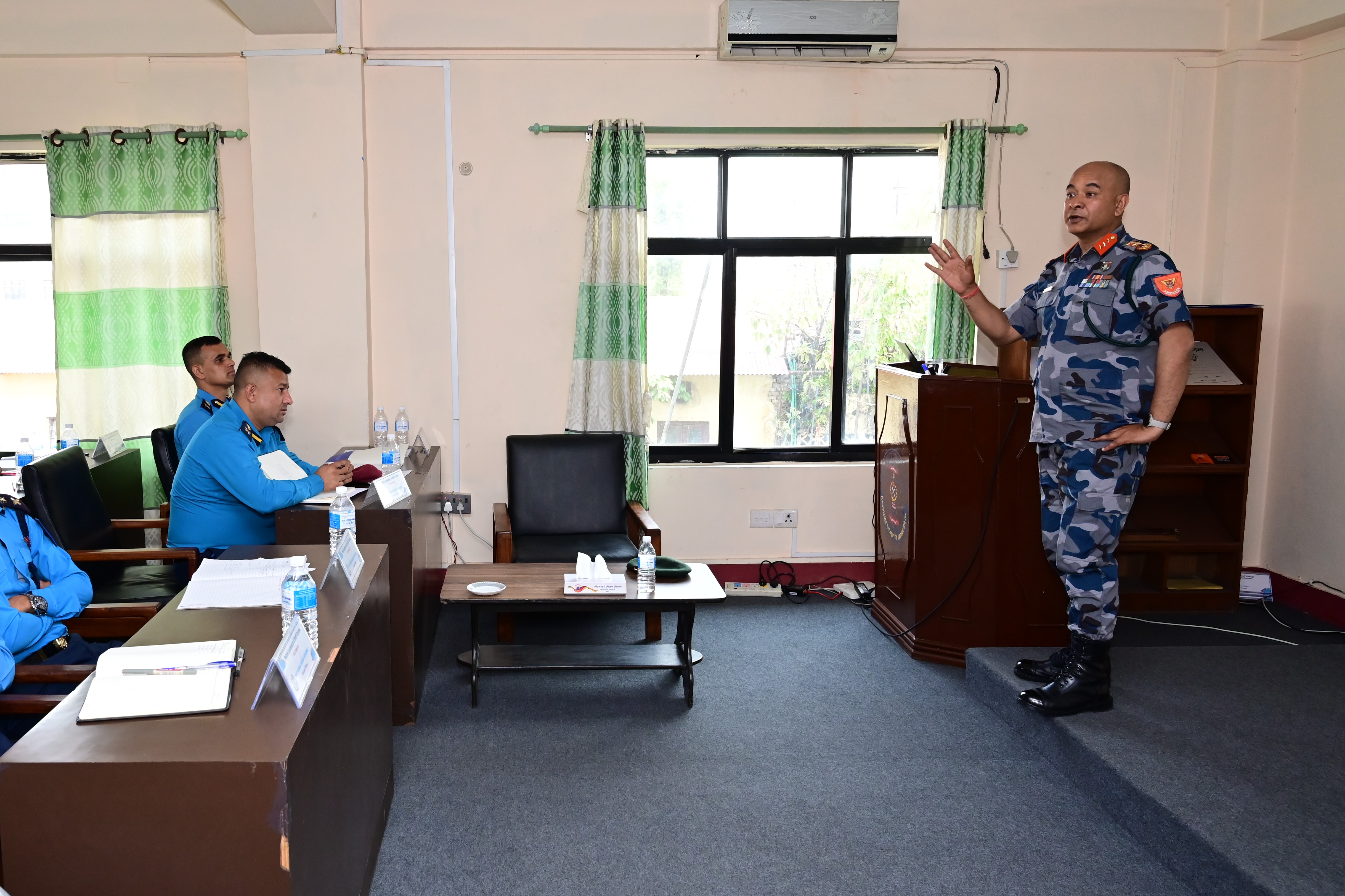
Student Officers of PLSC Batch 01 engaged in an insightful session led by IGP Raju Aryal, APF Nepal, focusing on Leadership, Risk, Resilience and Risk Management.

An engaging interaction with IGP Dan Bahadur Karki and other senior leaders at Nepal Police Headquarters concluded as Student Officers of PLSC Batch 01 shared insights and experiences from their Foreign Study Tour (FST).
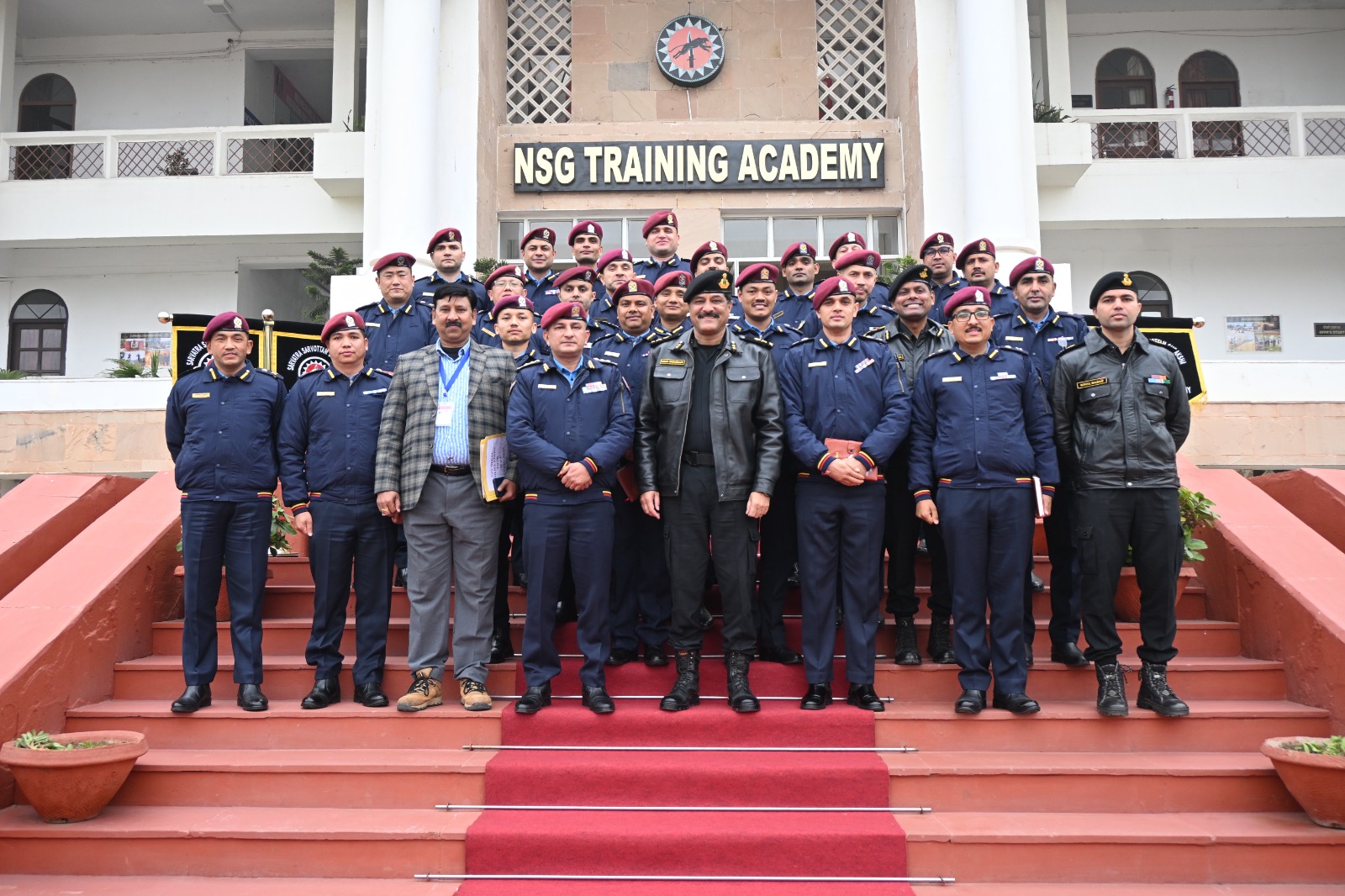
On Day 8 of the Foreign Study Tour, the delegation visited the National Security Guard (NSG) Academy in Manesar, Haryana, and held an interaction with the Maj. Gen. Vikash Choudhary, IG, NSG Academy.
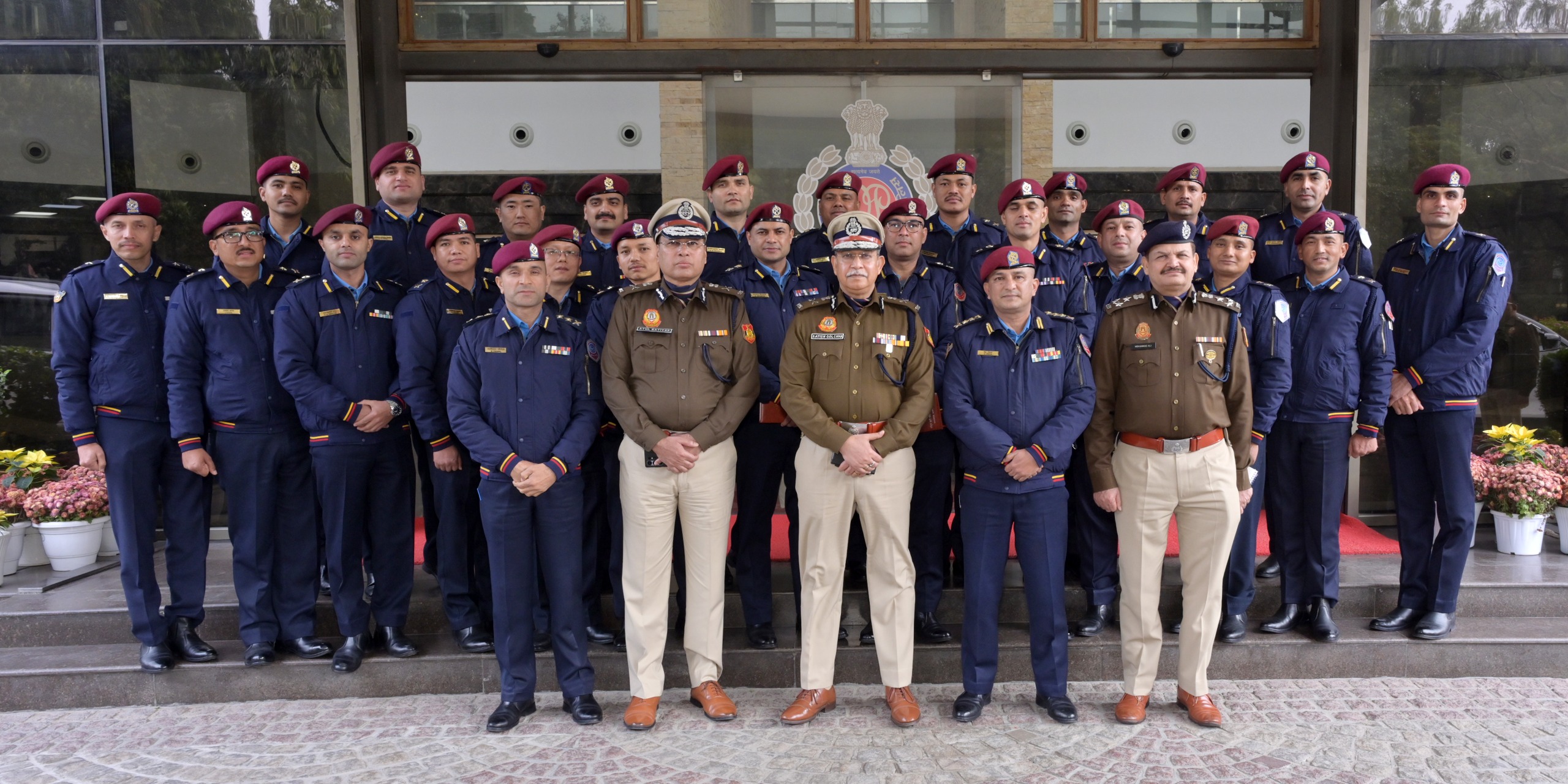
On Day 4 of the Foreign Study Tour, the delegation visited the Delhi Police Headquarters for an interaction with the Commissioner, followed by an observational visit to a local police station.
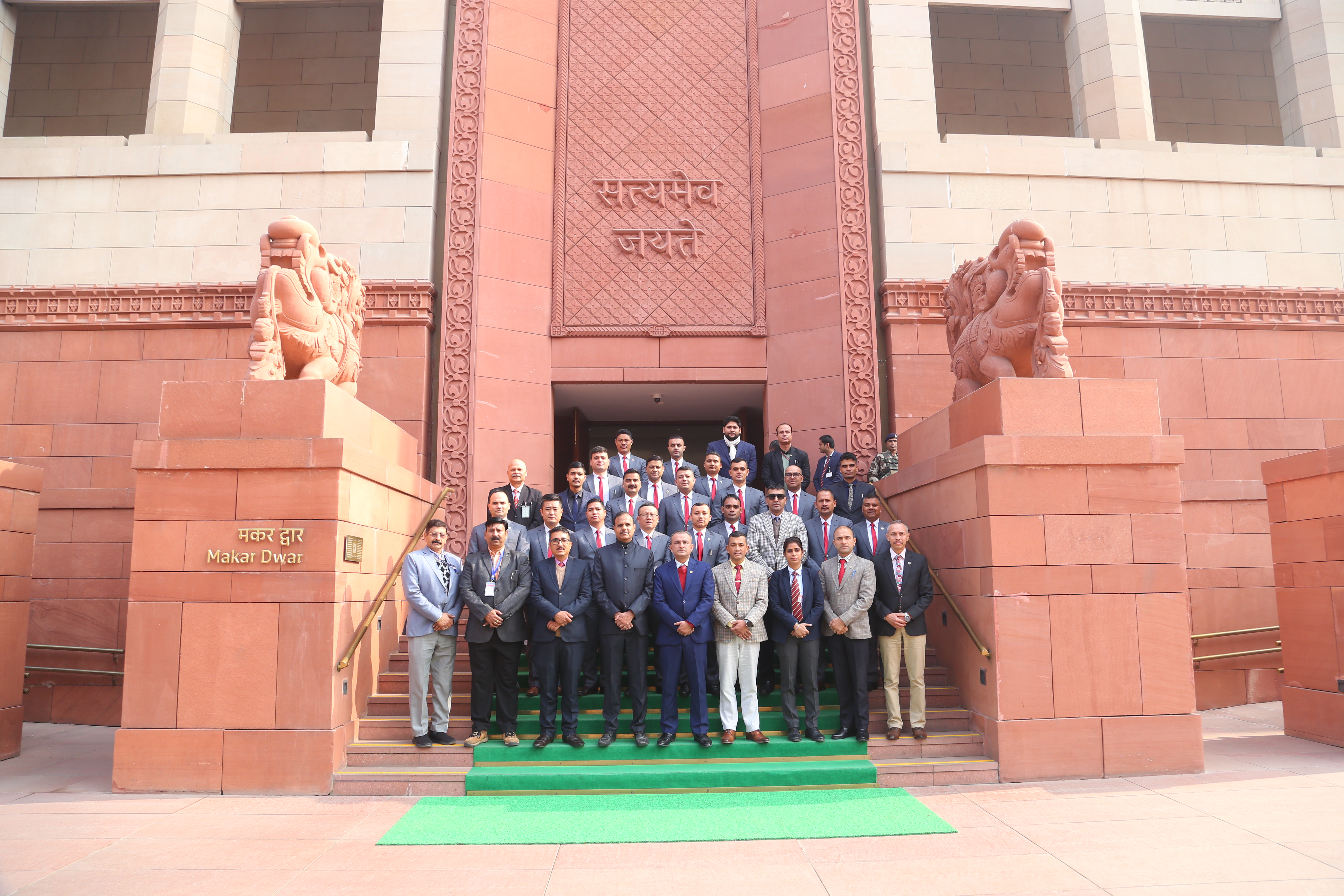
The 25-member Foreign Study Tour (FST) delegation, led by SSP Ved Bisa, was graciously welcomed by the host, Delhi Police and provided with premium hospitality, facilitation and liaison support while visiting Indian police institutions as well as cultural, social and religious landmarks.
Police Clearance Report
Nepal Police provides character certificates to local and foreign nationals who apply online for various purposes.
Contact Information
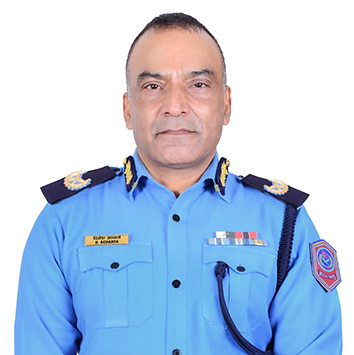
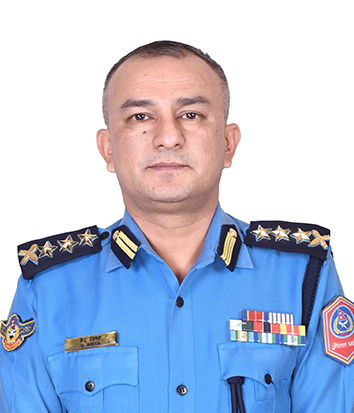
Spokesperson
Rank and Name:
Contact:
(PLSC Faculty Office)
Contact : +9779851290255
-
Announcement for Journal Article in Advanced Studies in Policing (ASP): Journal of Nepal Police Staff College Vol.01, 2026
2083-01-03Announcement for Journal Article Advanced Studies in Policing (ASP): Journal of Nepal Police Staff CollegeCall for Papers – Vol. 01, 2026Dear Esteemed Scholars,The Nepal Police Staff College (NPSC) is pleased to announce a Call for Papers for the first issue of Advanced Studies in Policing (ASP): Journal of Nepal Police Staff College (Vol. 01, 2026). ASP is a double-blind, peer-reviewed annual scholarly publication of NPSC and features empirical research articles, Conceptual/Experiential papers and Policy perspectives.Thematically, the Journal covers professional policing issues, including law enforcement, crime management, public safety, security, cyber security, governance, human rights, institutional management, service delivery, and community engagement, as they relate to local, national, and global contexts. We invite scholarly contributions from academicians, researchers, policymakers, experts, practitioners, serving and retired police professionals, NPSC faculty, and officials from similar institutions worldwide. Our target readership includes national and international policing officials and agencies, scholars, researchers, policymakers, commentators, media professionals, executives, consultants, students, trainees, and the general public interested in and engaged with policing and related issues.ContextEstablished in 2025, NPSC is an institution of higher learning dedicated to advancing knowledge, research, and development for professional excellence in policing and related services. Our strategic priorities include leadership development, policy analysis, research promotion, organizational innovation, and performance effectiveness aimed at enhancing capacity and readiness to deliver high-quality policing in an evolving security landscape. NPSC offers post-experience education, professional development, policy discussions, advisory services, and research initiatives, including the flagship Police Leadership and Staff Course (PLSC), which integrates a Master in Police Sciences (MPS) affiliated to Tribhuvan University (TU) with comprehensive leadership course. The Journal furthers our commitment to enriching policing scholarship and practices.Purpose, Nature, and ScopeThe journal advances scholarship in policing by providing a platform for empirical, experiential, and reflective knowledge that promotes professional excellence. Specifically, it aims to: Promote scholarly engagement with issues relevant to policing and related services, both within the Nepal Police and among its major stakeholders. Facilitate the sharing of knowledge, insights, and experiences on policing and related issues among practitioners, academics, researchers, policymakers, and experts. Encourage research and innovation on critical and emerging policing issues and related subjects. Build substantive knowledge capital to inform strategic and programmatic initiatives and support evidence-based policy-making in policing and related issues. Generate interdisciplinary dialogue to foster collaboration across disciplines in addressing emerging challenges in policing and related services. Enhance professionalism in policing and related services by providing relevant knowledge to inform policing behaviors, decisions, and practices. Document and disseminate experiences, lessons, and innovations within policing for future learning and development. Submission GuidelinesBefore submitting, ensure your manuscript adheres to these requirements: Originality: Submissions must be original, unpublished work. Plagiarism, academic misconduct, or AI-generated content is strictly prohibited. a. Manuscript Structure (Research articles): Title Abstract (150 – 200 words) Keywords (3–5) Introduction (background or context, statement of the research problem/issue, objectives, significance, outline of the paper) Review of Literature Research Design Findings and Discussion Implications (for policy, practices, and further research) and Conclusion References (APA 7th Edition) Short author bio(s) Word limits: For 4,000–10,000 words b. Manuscript Structure (Conceptual/Experiential papers, Policy perspectives): Title Abstract (150 – 200 words) Keywords (3–5) · Introduction (background or context, articulation of the central issues, objectives, significance, informational nature and sources, outline of the paper) Thematic elaboration and analysis (of relevant concepts, issues, propositions, cases, arguments, policies, and practices by linking with relevant theories, describing, arguing, and interpreting facts, ideas, or experiences, presenting perspectives, and proposing courses of actions and directions for applications – divided into two or more sub-sections based on the scope of thematic focus). Inferences and their discussions, including policy and practical implications Conclusion References (APA 7th Edition) Short author bio(s) Word limits: (2,000– 5000 words) Formatting: Font: Times New Roman, 12 pt Line spacing: Single space Margins/Indentation: Flush left Justification: Full Headings, figures, tables: APA 7th Edition Referencing: APA 7th Edition throughout. Ethics: Disclose any conflicts of interest. Submission Process: Email manuscripts in MS Word format to plsc_facultyoffice@nepalpolice.gov.np. Deadline: June 15, 2026 (early submissions encouraged).For queries, contact the editorial team at plsc_facultyoffice@nepalpolice.gov.np or Call DSP Govinda Thapa, IS (9851281313).Your contributions will enrich policing scholarship. We look forward to your submissions for this inaugural issue. Sincerely, Editorial Team Nepal Police Staff College
[Read More] -
Strengthening Police–Academic Collaboration Through Dialogue on Electoral Conflict
2082-10-14A day long seminar on "Electoral Dispute, Violence and Conflict Resolution" was organized and concluded on 27 January 2026 successfully, at Nepal Police Staff College, Maharajgunj. The program brought together 17 Student Officers of PLSC Batch 01 and 12 Master's level students from Central Department of Conflict, Peace and Development Studies (CDCPDS), Tribhuvan University, in a meaningful academic-professional interaction and dialogue.The seminar's opening remarks was delivered by DSP Govinda Thapa, Instructing Staff at the College. This was followed by a presentation on the objectives of the seminar by Dr. Pitambar Bhandari, Head of the Department of CDCPDS, Tribhuvan University who emphasized on increasing importance of knowledge of electoral dispute and conflict dynamics in the context of democratic process.Participants divided in four groups presented key ideas on themed topics, including misinformation and disinformation in electoral campaigns, political parties and contentious issues through dialogue, electoral security and violence and pre- and post-election challenges. These sessions promoted analytical discussion, collaborative learning and the exchange of practical insights from both academic and policing perspectives.The seminar was further enriched by expert commentary and reflections from distinguished scholars and senior professionals, including Dean Prof. Dr. Mahananda Chalise, Assistant Dean Prof. Dr. Dilip Parajuli, Dr. Pitambar Bhandari, AIGP Devendra Subedi (Retd.), and College Director DIG Dinesh Kumar Acharya. Their contributions offered strategic, academic and operational perspectives on the management of electoral disputes and the advancement of peaceful democratic practices.The program ended with some interactive discussions and in reflections from participants emphasizing the importance of interdisciplinary engagement in dealing with electoral violence and conflict resolution. The seminar was very significant in strengthening the collaboration between academic institutions and security agencies towards assisting the democratic stability and informed electoral process.
[Read More] -
Foreign Study Tour (FST) of PLSC Batch 01: Strengthening Leadership and International Policing Perspectives
2082-09-29A twelve-day Foreign Study Tour (FST) to New Delhi, India, 29 December 2025 to 9 January 2026, was a successful event organized by the Nepal Police Staff College as part of the Police Leadership and Staff Course (PLSC), Batch 01. The tour was led by SSP Ved Bista and included a delegation of twenty-five members, which included instructing staffs, admin officers and student officers.The main goal of the FST was to provide experiential learning by direct exposure to the organizational structures, requirements and working practices of leading Indian law-enforcement and security agencies. The curriculum emphasized leadership, professional competence, comparative institutional learning and international cooperation.The delegation also paid a visit to some of the leading institutions such as the Embassy of Nepal in New Delhi, Central Bureau of Investigation (CBI) Headquarters, CBI Academy, Delhi Police Headquarters, National Security Guard (NSG) Academy, Bureau of Police Research and Development (BPR&D), Central Detective Training Institute (CDTI), the Presidential Office and Residence and the Parliament House of India. Cultural and historical landmarks were also visited as part of the program, which led to cultural awareness and team building.Important meetings were held with senior officials, such as His Excellency Dr. Shankar Prasad Sharma, Major General Vikash Choudhary (IG, NSG Academy) and Commissioner of Delhi Police, senior IPS officers of the Central Bureau of Investigation (CBI), Bureau of Police Research and Development (BPR&D) and Central Detective Training Institute (CDTI). The participants gained useful knowledge on investigative techniques, cyber and digital forensics, counter-terrorism training, community policing, managing the public order, research-based policing and technology-based emergency-response systems.The tour emphasized the importance of professional policing culture, institutional autonomy, policy-making based on research, integrated control and communication centers and specialized training institutions. The learning experience was significantly enhanced by exposure to high-end forensic laboratories, real-time policing technologies and leadership-based organizational practices.Overall, the FST contributed significantly to the capacity building of officers, strengthening their leadership, analytical thinking and professional confidence. On the organizational level, it provided useful standards of modernisation, training improvement, research focus and future inter-agency cooperation. The FST is an important academic and professional achievement of the Nepal Police Staff College, which reiterates its dedication to developing competent, ethical and visionary police leaders by exposing them to international exposure and learning.
[Read More]
| Published Date | Title | Actions |
|---|---|---|
| 2083-01-03 | Announcement for Journal Article in Advanced Studies in Policing (ASP): Journal of Nepal Police Staff College Vol.01, 2026 | |
| 2082-08-28 | Notice regarding result of PLSC Batch 02 Entrance Exam 2025 | |
| 2082-07-24 | Notice regarding CMAT Test Request Form | |
| 2082-07-18 | Notice regarding PLSC Batch 02 - Enrolment Form and Entrance Exam Form | |
| 2082-07-14 | Notice regarding entrance examination of PLSC Batch 02 |
Highlights
- PLSC Batch 02 Inaugurated at Nepal Police Staff College
- Announcement for Journal Article in Advanced Studies in Policing (ASP): Journal of Nepal Police Staff College Vol.01, 2026
- Announcement for Journal Article in Advanced Studies in Policing (ASP): Journal of Nepal Police Staff College Vol.01, 2026
- Strengthening Police–Academic Collaboration Through Dialogue on Electoral Conflict
- Foreign Study Tour (FST) of PLSC Batch 01: Strengthening Leadership and International Policing Perspectives
- Notice regarding result of PLSC Batch 02 Entrance Exam 2025
- Notice regarding CMAT Test Request Form
Reports and Publications
Nepal Police App
Now available in both Google Play and Apple app stores


